ICE detained a pregnant woman. She went months without proper care.
March 5, 2026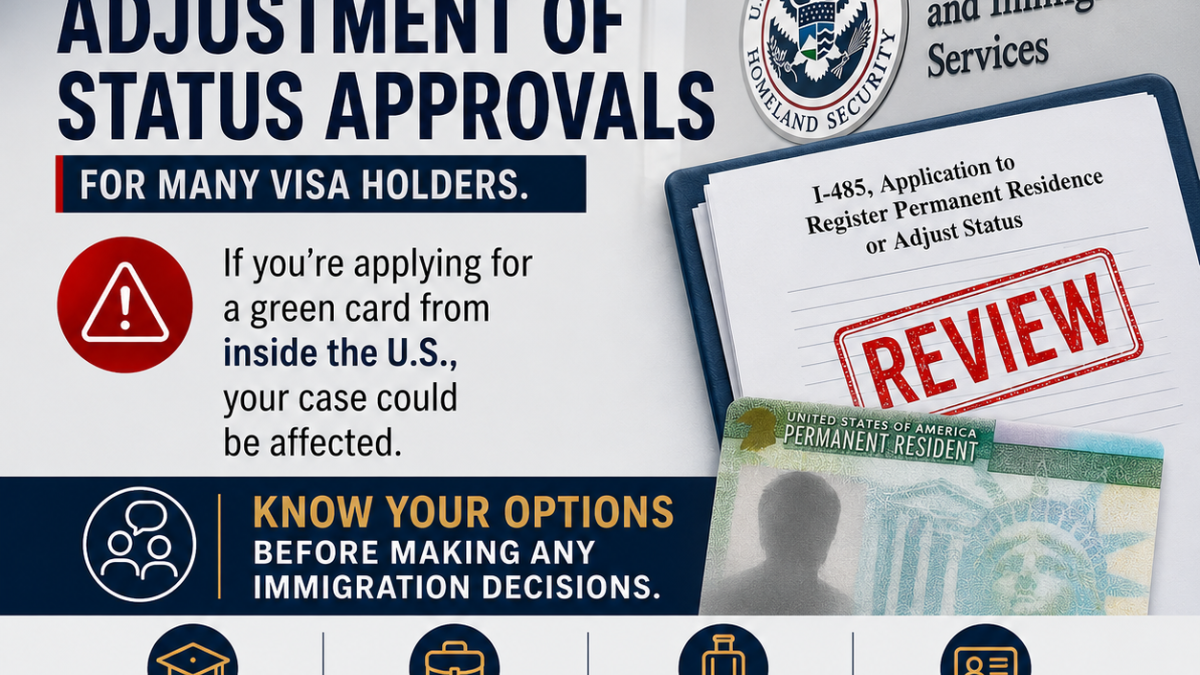
If you entered the U.S. on a student visa, work visa, or tourist visa and are planning to apply for a green card, a new USCIS policy could significantly affect your immigration case.
On May 21, 2026, USCIS issued a policy memo directing officers to deny many Adjustment of Status applications filed inside the United States for temporary visa holders. Instead, applicants may now be required to complete their immigrant visa process through a U.S. consulate abroad.
Adjustment of Status allows eligible individuals to apply for permanent residency without leaving the U.S. This new guidance could impact people who entered on:
• Tourist visas (B-1/B-2)
• Student visas (F-1)
• Employment visas (H-1B, L-1, and similar categories)
For many individuals, being forced to leave the United States to process abroad may create serious risks, including possible 3-year or 10-year bars from reentering the country depending on their immigration history.
This policy change could affect families, employment opportunities, and long-term immigration plans.
Important things to know:
• This does NOT automatically mean your case will be denied
• You are not automatically required to leave the country
• Certain applicants may still qualify for exceptions or alternative legal options
At this time, the memo appears likely to apply not only to future Adjustment of Status filings, but also to cases that were already pending as of May 21, 2026.
Some applicants may still be exempt from these restrictions, including:
• Asylees
• Diversity Visa Lottery entrants
• Certain applicants under INA 245(i)
• U visa applicants and victims of qualifying crimes
Historically, many Employment-Based immigrants and Immediate Relatives in Family-Based immigration categories have completed the green card process inside the United States. Together, these groups represent a large percentage of green card applicants.
USCIS officers may now place greater emphasis on discretionary factors when reviewing Adjustment of Status cases. Officers may review:
• Immigration history
• Family ties in the U.S.
• Moral character
• Community involvement
• Any positive or negative factors related to the applicant’s background
Common issues that could negatively impact a case may include:
• Visa overstays
• Criminal charges or arrests
• DUI offenses
• Repeated traffic violations
If you are applying for Adjustment of Status, it is important to proactively present evidence showing positive factors in your case. This may include volunteer work, community involvement, support for family members, proof of rehabilitation, or other evidence demonstrating good moral character.
If your case is already pending, additional supporting documentation may still be submitted during the interview process or in response to a Request for Evidence (RFE) or Notice of Intent to Deny (NOID).
Even if an I-485 application is denied, legal options may still exist depending on your circumstances. Some applicants may be able to renew their application before an Immigration Judge or refile with USCIS if they remain eligible.
Before filing documents, traveling internationally, or making any decisions about your immigration case, consult with an experienced immigration attorney. Immigration decisions made today could affect your future for years to come.
Contact Badawi Law Firm to discuss your options and protect your immigration status.